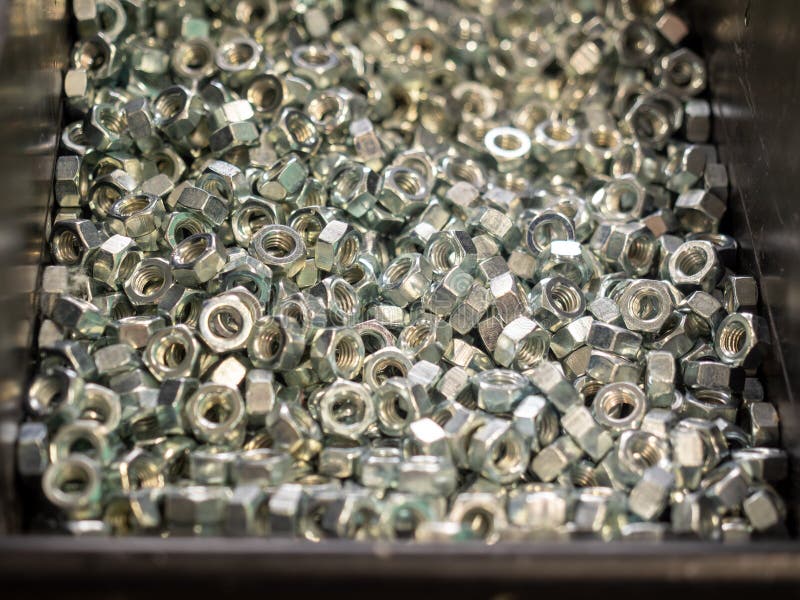
Hex Nuts & Lock Nuts Manufacturer: DIN 934, DIN 985 and Custom Nut Solutions for Global OEMs
At first glance a hex nut is the simplest part in a bolted joint. It is also the component that decides whether an assembly holds torque for twenty years in a wind turbine tower, or loosens on a vibrating conveyor after six months. As a dedicated custom fastener manufacturer and supplier, YP Fasteners (Yuanpai) has spent more than a decade engineering, cold-forging, threading and inspecting nuts for OEMs, distributors and industrial buyers across Europe, Southeast Asia, the Middle East and the Americas. This page is our technical reference for buyers sourcing hex nuts and lock nuts at scale — covering standards, property classes, prevailing torque behaviour, grade matching, surface finishes, quality documentation and the custom work that generic catalogues cannot deliver.
If you already know what you need, skip ahead to the quick-reference table or our request-for-quote section. If you are specifying a joint for the first time, read on — the difference between a DIN 934 hex nut, a DIN 985 nyloc lock nut and a DIN 6923 flange nut is not cosmetic, it is mechanical.
1. Why the Nut Is Half the Joint
A bolted connection is a system. The bolt supplies clamp load; the nut must sustain that clamp load without stripping, without backing off, and without corroding away in service. When a joint fails in the field, roughly half of root causes trace back to the nut rather than the bolt: thread stripping of the internal thread, cross-threading during assembly, loss of preload under vibration, or galvanic corrosion under the head of a flange nut.
For a buyer, this means nut selection should never be an afterthought picked from the same catalogue line as the bolt. Property class, thread tolerance, prevailing torque method, surface treatment and mating washer interface all have to be specified together. We cover the matching rules in detail in Section 5.
YP Fasteners manufactures nuts as a complementary family to our hex bolts, nuts and washers range, so you can source a complete joint — bolt, nut and flat washers — on one mill certificate, one packing list and one container.
2. Hex Nuts: DIN 934, ISO 4032 and ISO 4035
The standard hex nut is the workhorse of industrial fasteners. Three dimensions dominate global specifications:
- DIN 934 — the classic German hex nut, full height, used widely across European, Asian and Middle Eastern procurement. This is the reference specification most buyers mean when they say "DIN nut".
- ISO 4032 — the international equivalent of the heavy/full-hex nut, dimensions aligned with DIN 934 for most M5–M64 sizes, adopted heavily by EU machinery standards.
- ISO 4035 — the thin hex nut (low-form). Used where stack height is constrained, as a jam nut, or as a locking companion against a full nut. It is not intended to carry full proof load on its own.
For sizes M6 through M24 — the volume sweet spot of most OEM purchasing — DIN 934 and ISO 4032 are dimensionally interchangeable, which simplifies global sourcing. Above M30, buyers should confirm whether their drawing calls out DIN 934 (older imperial-derived dimensions persist in some legacy German drawings) or ISO 4032.
Property classes for hex nuts
Nut property classes are defined under ISO 898-2 (carbon and alloy steel nuts) and ISO 898-10 (stainless steel nuts). The three classes we ship most often:
| Class | Min. hardness | Typical use |
|---|---|---|
| 5 | ~HV 130 | Low-strength structural, furniture, general MRO |
| 8 | ~HV 250 | Matches 8.8 bolts — structural, equipment, chassis |
| 10 | ~HV 320 | Matches 10.9 bolts — heavy machinery, automotive |
| 12 | ~HV 380 | Matches 12.9 bolts — high-strength engineering |
A class 8 nut is the default for most industrial buyers. It is readily available, forgiving of assembly variation and compatible with the dominant 8.8 bolt. Class 10 and 12 nuts require tempered alloy steel and tighter process control; we manufacture them in controlled batches with 100% hardness verification on the heat-treat line.
3. Lock Nuts: DIN 985, DIN 982 and Prevailing Torque Types
Plain hex nuts will back off under vibration. That is not a defect — it is the physics of a free-running thread. When a joint sees cyclic load, transverse slip, or thermal cycling, a prevailing torque nut is required.
DIN 985 — nylon insert lock nut (nyloc)
The DIN 985 nyloc nut is the most widely specified lock nut in global industry. A circular nylon insert is swaged into the top of the nut; as the nut is threaded onto a bolt, the nylon is elastically deformed over the thread, generating a constant prevailing torque that resists rotation.
Key engineering points buyers should know:
- Temperature limit. Standard nylon inserts soften above roughly 120 °C and permanently lose prevailing torque. Above that range, specify a metal prevailing torque nut (see below).
- Reusability. Nyloc nuts are designed for one installation. Re-torquing after removal reduces prevailing torque by 30–50%; for safety-critical joints, replace.
- Thread direction. The nylon insert grips the last thread engagement; do not run the nut on with power tools at full speed — heat from friction can damage the insert.
- Size range. We supply DIN 985 from M4 up to M36 in carbon steel and stainless A2-70 / A4-80.
DIN 982 — heavy nylon insert lock nut
DIN 982 is the taller, heavier cousin of DIN 985. The greater height allows more thread engagement under the nylon insert, making it suitable for use with higher-strength bolts (10.9 and above) and for joints where the nut must carry proof load rather than merely resist rotation. Dimensionally it sits between DIN 985 and a full-height hex nut; specify DIN 982 when your drawing calls for a "high nyloc".
Metal prevailing torque nuts
When temperature or chemical exposure rules out nylon, we supply all-metal prevailing torque types:
- Stover / torque nuts ( distorted thread section at the top of the nut )
- Prevailing torque hex nuts with a bent or crimped thread segment
- Serrated flange lock nuts ( DIN 6923 with serrations — see Section 4 )
All-metal types survive up to 300 °C and aggressive chemical environments, but they do not seal against loosening as reliably as a properly selected nylon insert under pure transverse vibration. The right choice depends on your load case — talk to our engineering team before defaulting to one.
4. Flange Nuts: DIN 6923, Serrated vs Smooth
A flange nut integrates a washer face under the hex body, distributing clamping pressure over a larger bearing surface and eliminating the need for a separate flat washer. The dominant specification is DIN 6923 (hexagon flange nut), with the international equivalent under ISO 4161.
Two variants matter:
- Smooth flange (DIN 6923, plain face). Used on painted, coated or soft surfaces where serrations would scratch the finish. Also preferred for stainless assemblies where galvanic concerns matter.
- Serrated flange. Radial serrations bite into the mating surface, adding a mechanical locking effect on top of friction. Serrated flange nuts should not be used on machined or painted surfaces they are expected to leave intact, and they cannot be re-flattened once disturbed.
Flange nuts are common in automotive chassis, sheet-metal enclosures, pump housings and fast-moving consumer goods machinery where part count and assembly time matter. We cold-form flange nuts in M5–M20 with class 8 and 10 properties, in zinc-plated and stainless finishes.
5. Grade Matching: Nut Property Class vs Bolt Property Class
This is the single most common specification mistake we see in buyer RFQs. A nut is not "stronger" in isolation — it must be matched to the bolt so that, in an overload event, the bolt yields rather than the internal thread stripping.
The rule under ISO 898-2 / ISO 898-1 is:
| Bolt property class | Required nut property class |
|---|---|
| 4.6 / 4.8 | Class 5 |
| 5.6 / 5.8 | Class 5 |
| 8.8 | Class 8 |
| 10.9 | Class 10 |
| 12.9 | Class 12 |
Two practical notes:
- Over-matching is safe, under-matching is not. A class 10 nut on an 8.8 bolt is fine. A class 8 nut on a 10.9 bolt will strip before the bolt reaches proof load — do not do it.
- Stainless has its own ladder. Under ISO 3506 / ISO 898-10, A2-70 bolts pair with A2-70 nuts; A4-80 bolts require A4-80 nuts. Never mix A2 hardware with a carbon steel nut in a corrosive environment — the galvanic couple will drive rapid corrosion.
When you send us a drawing, our engineering team cross-checks every nut-to-bolt pairing against this table before quoting, and flags mismatches back to you.
6. Thread Tolerance: Why 6H Is the Default
Internal threads on nuts are Class 6H under ISO 965-1 — the medium-tolerance, general-purpose fit that pairs with 6g external threads on bolts. 6H is the default on every DIN 934, ISO 4032, DIN 985 and DIN 6923 nut we ship unless you specify otherwise.
Buyers occasionally ask for tighter (5H) or looser (7H) fits:
- 5H is used for precision instrument assemblies or where gauging repeatability is critical.
- 7H is used in high-temperature service (the clearance accommodates thread growth) or for rough-assembly joints in heavy construction.
We roll and tap internal threads on dedicated multi-station machines and gauge every production lot with GO / NO-GO thread gauges. Gauge records are part of the inspection package on request.
7. Materials and Surface Treatments
Materials
- Carbon steel — medium carbon steel (typically 08F / 10B21 grade equivalents) for class 5 and 8; alloy steel (boron-treated or medium-carbon alloy) for class 10 and 12.
- Stainless steel A2-70 (304) — general corrosion resistance, food-grade and outdoor use.
- Stainless steel A4-80 (316) — marine, coastal, chemical and wastewater environments.
- Alloy steels and special materials — on request we manufacture nuts in 42CrMo4, 35CrMo, brass, aluminium and duplex stainless for specialist OEMs.
Surface treatments
| Finish | Thickness | Corrosion resistance (salt spray) | Notes |
|---|---|---|---|
| Plain / black | — | None | Indoor, lubricated assemblies |
| Black oxide | < 5 µm | Poor | Cosmetic + light oil film |
| Zinc-plated (Cr³+) | 5–8 µm | 72–96 h red rust | General industrial; RoHS-compliant passivate |
| Hot-dip galvanized (HDG) | 45–85 µm | 500–1000 h | Outdoor structural; requires over-tapped 6AZ threads per ISO 898-2 |
| Geomet / delta-protection | 8–15 µm | 500–720 h | High-strength bolts (no hydrogen embrittlement) |
| Waxed / lubricated film | < 5 µm | — | Controlled friction coefficient for torque-controlled tightening |
HDG note for buyers: hot-dip galvanized nuts are over-tapped (6H → 6AZ) to accommodate the coating thickness on the mating bolt. If you mix a 6H nut with an HDG bolt, you will not get full thread engagement. Specify both sides together.
8. Custom Nuts: When Catalogue Sizes Are Not Enough
Standard DIN and ISO nuts cover perhaps 80% of industrial demand. The remaining 20% is where YP Fasteners earns its keep. We regularly manufacture:
- Special threads — unified (UNC/UNF), BSW, BSF, trapezoidal, Acme, left-hand, and partial-profile threads for retrofit applications.
- Non-standard dimensions — across-flats sizes, heights, chamfer angles or pilot diameters outside DIN/ISO, to match legacy equipment or a specific joint geometry.
- Special materials — stainless A4-80 in large diameters, Inconel-grade equivalents for high-temperature fasteners, brass for electrical earthing nuts.
- Assembly-friendly variants — knurled nuts, wing nuts, weld nuts (DIN 928/929), castle nuts (DIN 935) with split pins, and nuts with drilled holes for wire locking.
- Marking and traceability — manufacturer's mark, property-class marking, and batch code laser-etched or cold-stamped on every nut.
Minimum order quantities for custom work start at 5,000 pieces for turned or cold-formed specials; lower volumes are possible on a quoting basis depending on complexity.
9. Quality, Inspection and EN 10204 3.1 Certification
A nut is only as good as the documentation behind it. Every batch we ship is produced under our ISO 9001-controlled process, with the following inspections as standard:
- Dimensional inspection — across-flats, across-corners, height, thread concentricity, sampled per lot per ISO 2859-1.
- Hardness testing — Rockwell / Vickers on the nut face, on every heat-treat batch.
- Proof load testing — proof load applied per ISO 898-2 at the required property class; no permanent set permitted.
- Hardness wedge testing (for high-strength nuts) — ensures the nut fails in a ductile rather than brittle mode.
- Thread gauging — GO and NO-GO on every production lot.
- Salt-spray testing — on coated samples, to verify finish thickness and corrosion performance.
For OEM and regulated-industry buyers, we supply EN 10204 3.1 mill certificates — issued by our in-house inspection authority, tracing each batch back to the raw material heat number, heat-treatment furnace record and inspection results. 3.2 certification (third-party witnessed, SGS/BV/TÜV) is available on request.
10. Packaging, Lead Times and Global Shipping
We ship nuts by the bulk bag, by the boxed carton, or palletized to your specification:
- Bulk export packing — woven bags on pallets, with label tags per carton; standard for distributor and reseller customers.
- Small-boxed packing — numbered boxes inside a master carton, ideal for OEM kitting and just-in-time lines.
- Palletized and containerised — 20GP / 40HQ loads stowed and strapped for sea freight, with packing list, weight and measurement sheets for forwarders.
Standard lead times:
- Stocked DIN 934 / DIN 985 in M6–M20 class 8, zinc-plated: 7–15 working days.
- Class 10 / 12 or stainless specials: 25–35 working days.
- Fully custom drawings: 45–60 days including tooling.
We ship FOB Shanghai / Tianjin, and are experienced in container consolidation alongside bolts and washers — reducing your freight cost and customs complexity.
Quick-Reference: Nut Type, Standard, Property Class and Typical Application
| Nut type | Standard | Property class | Typical application |
|---|---|---|---|
| Hex nut, full height | DIN 934 / ISO 4032 | 5, 8, 10, 12 | General structural, machinery, chassis |
| Hex nut, thin | ISO 4035 | 5, 8 | Jam nuts, height-constrained joints |
| Nyloc lock nut | DIN 985 | 5, 8, A2-70 | Vibration-prone equipment, conveyors, motors |
| Heavy nyloc lock nut | DIN 982 | 8, 10, A4-80 | High-strength joints, 10.9 bolt pairing |
| Flange nut, smooth | DIN 6923 | 8, 10 | Painted surfaces, stainless assemblies |
| Flange nut, serrated | DIN 6923 | 8 | Sheet metal, chassis, anti-loosening |
| Castle nut | DIN 935 | 5, 8 | Pinned joints, steering, suspension |
| Weld nut | DIN 928 / 929 | 8 | Weld-on fabrication, box sections |
Related Guides
- Custom Fastener Manufacturer & Supplier — YP Fasteners Center Page — our full capability overview across bolts, nuts, screws and specials.
- Hex Bolts, Nuts and Washers — Complete Joint Sourcing — how bolt, nut and washer interact in a properly specified joint.
- Washers: Flat, Spring and Lock Washer Selection — why a washer under a nut changes the bearing surface and the preload.
Frequently Asked Questions
Q: What is the difference between a DIN 934 nut and a DIN 985 lock nut?
A: DIN 934 is a plain free-running hex nut used in static joints where no loosening is expected. DIN 985 is a prevailing torque nyloc nut with a nylon insert, used where vibration or dynamic load would otherwise loosen a plain nut. They are not interchangeable.
Q: Which property class nut do I use with an 8.8 bolt?
A: class 8 nut, per ISO 898-2. Using a class 5 nut under an 8.8 bolt risks thread stripping before the bolt reaches proof load. A class 10 nut is safe but unnecessary cost.
Q: Can nyloc nuts be reused?
A: Technically yes, but the prevailing torque drops 30–50% after first installation. For safety-critical, vibration or pressure-containing joints, replace them. For static MRO where re-torque is expected, use an all-metal prevailing torque nut instead.
Q: What is 6H thread tolerance?
A: 6H is the standard medium internal thread tolerance under ISO 965-1, designed to pair with 6g external threads on bolts. It is the default on every nut we ship unless your drawing specifies 5H or 7H.
Q: Can you supply hot-dip galvanized nuts?
A: Yes. HDG nuts are over-tapped to 6AZ to accommodate the coating thickness on the mating HDG bolt. Specify both bolt and nut finishes together — a 6H nut on an HDG bolt will not fully engage.
Q: What certifications do you provide?
A: Standard shipments include dimensional and hardness inspection records. EN 10204 3.1 mill certificates are available on request; 3.2 third-party witnessed certification (SGS, BV, TÜV) can be arranged for regulated industries.
Talk to Our Engineering Team
Whether you are a distributor restocking a standard DIN 934 line, an OEM specifying a custom lock nut for a vibration-critical joint, or a buyer consolidating a full container of bolts, nuts and washers, YP Fasteners will quote within 48 hours.
- Standard catalogue RFQs — send your drawing or part list; we will confirm stock, price and lead time the same week.
- Custom and special nuts — share your drawing; our engineering team will review grade match, thread form and finish, and flag any design risks before tooling.
- Quality-sensitive projects — ask for our sample pack, 3.1 documentation and a reference customer in your industry.
Request a quote today — or contact our sales engineers directly with your nut specification, target quantity and destination port. We will respond with a datasheet, pricing and a production schedule within two business days.